Welcome to Black History Month! As is my tradition, I will post a Black horror movie every day of this month on Facebook and X (find me there to chat). We can engage about the movie there and you can find gems you may not have seen before. I’ll share the first movie I’m posting here in the newsletter, but first I want to tell you about something cool.
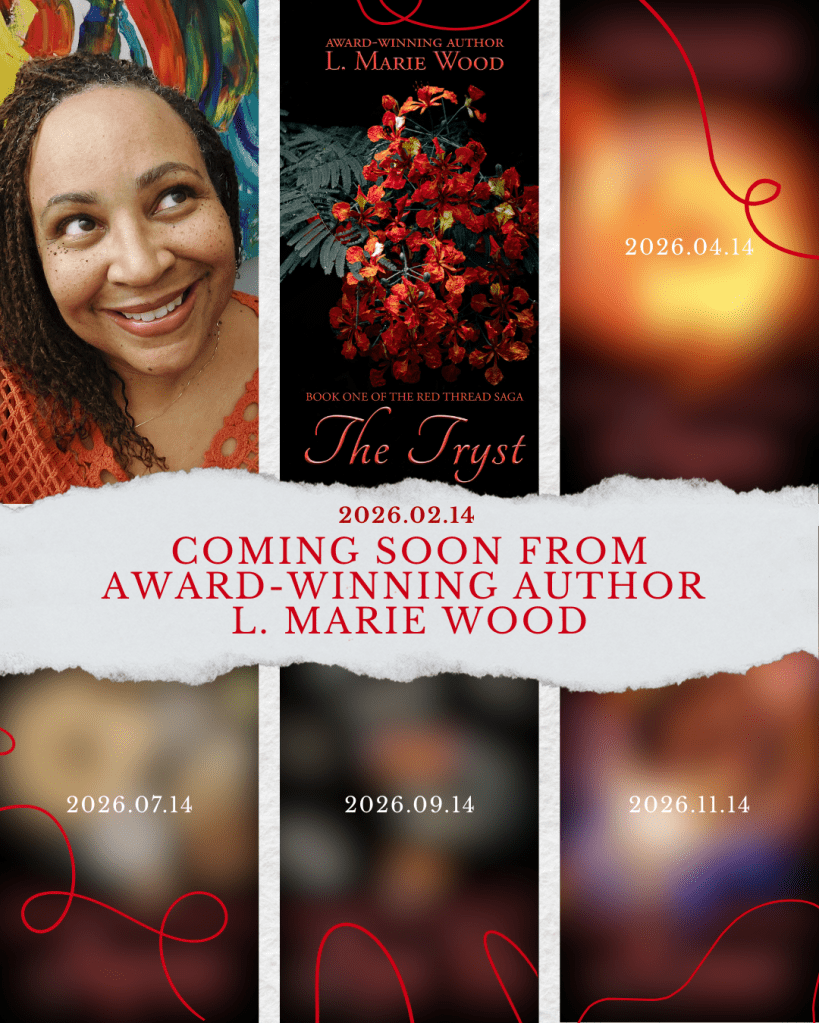
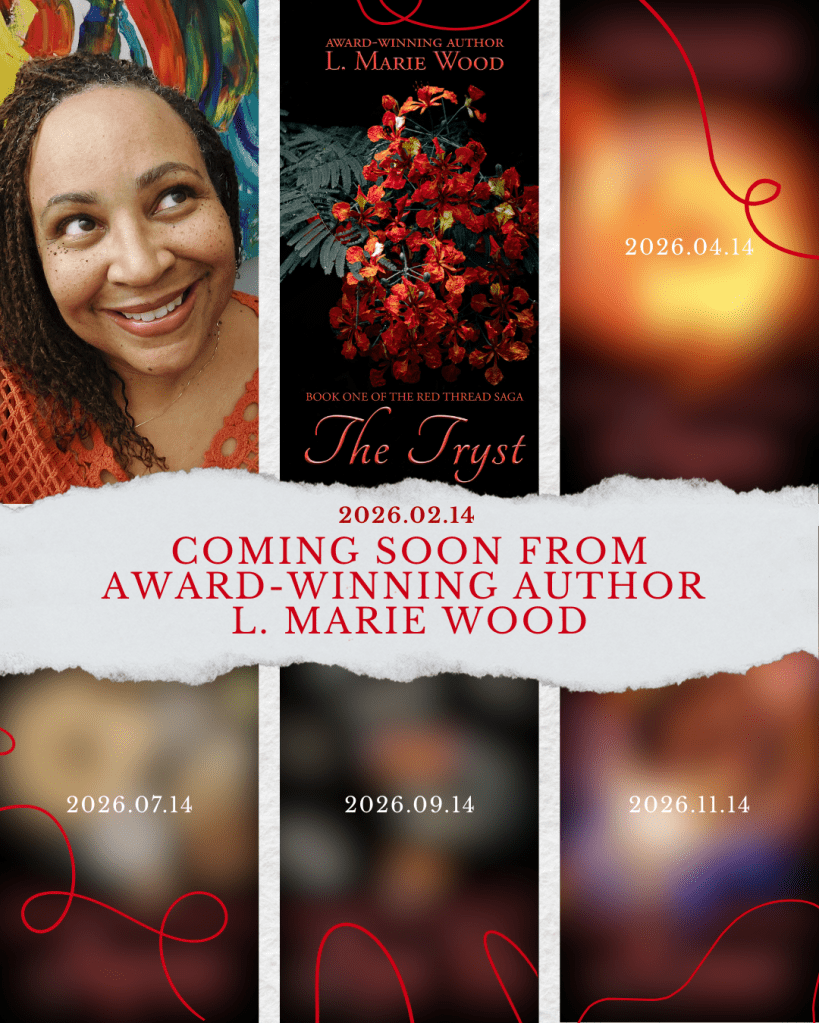
I’ve always said that February is MY month: it is Black history month, it used to be Women in Horror month (this has since moved to March, but that’s ok), and it is my birthday month. It has also been a new release month for me in the in the past and this year is no different. On Valentine’s Day, my slipstream (read: romancy, horror, action, sci-fi) beauty will be released into the world. I’m so excited to introduce book #1 of The Red Thread Saga: The Tryst.
Back cover copy:
A moment in time… insignificant and fleeting for most, but for Nicole, Mark, and Eric, it is life-altering. Three strangers meet in a town they don’t know in a place they hadn’t expected to end up only to find that they are exactly where they were supposed to be… again.
Love always finds a way.
Through space and time, past and future, through lifetimes and storylines they were destined to find each other, love each other, lose each other – coordinates and weapons, scenarios and demographics be damned. A malfunction, to be sure. But when Ryan tries to tinker with his project, a weapon the likes of which has never been seen in all of the Galactic Collaborative, he finds out just how inexorable their link is… and how insidious.
The first book of a slipstream series that will challenge the way you think about love, life, connection, and purpose, The Tryst will catch you in its whirlwind and never let you go. Each book in The Red Thread Saga will combine urban fantasy, mystery, thriller, psychological horror, action, suspense, science fiction elements in differing measures, always with romance as an undercurrent.
The ENTIRE series (5 books y’all!) will be released THIS YEAR!!!
You won’t have to wait forever to find out what happens next! Put these dates in your calendar!
🙂
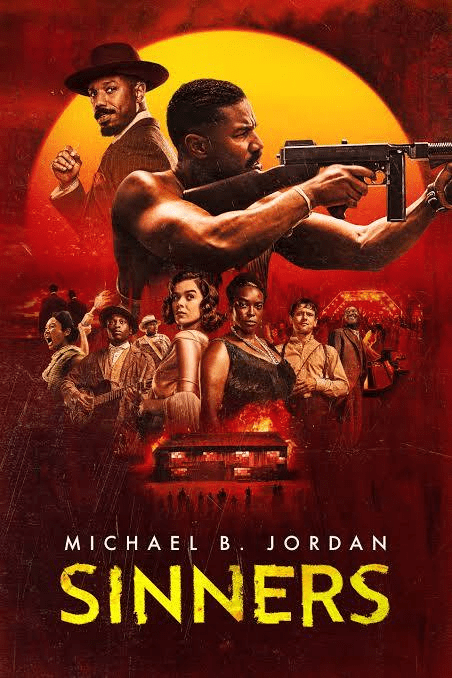
Ok, back to the movie. My day #1 movie choice for Black History Month is…
drum roll…
Sixteen Oscar nominations… vampire flick with depth… southern gothic vibes… and so much more. I loved this movie so much and have engaged in conversation about it on several levels over the past few months. I even wrote an article about it and its place in the horror landscape for Nighttide Magazine. Check it out if talking and thinking about horror is your thing!
Writing horror for novels or short stories — and writing horror for film or screen — are different, but lessons from one medium can strengthen your writing in the other. In this article, I explore what horror writers can learn from film: pacing, structure, fear timing, sensory detail, and the power of suggestion.
Why Film Horror Matters for Writers
Films use visual and auditory tools — light, shadow, sound, silence, pacing, editing — to evoke fear. As a horror writer, you don’t have those tools literally, but you do have words. By studying how film horror works, you can emulate many of those effects in your prose. That crossover can make your horror more cinematic, immersive, and emotionally impactful.
1. Learn Pacing & Tension — Build Scenes Like Scenes in a Film
Horror films carefully pace scares. There’s setup, buildup, tension, release, and silence. Writers can mimic this in prose. Use scene structure to create tension arcs: slow buildup, simmering unease, sudden reveal, aftermath, quiet dread. This gives rhythm — tension and release — just like film.
Alternate calm and horror to keep readers off‑balance. Use pacing in sentence and paragraph length: slow, descriptive prose for buildup; short, sharp sentences for shock or panic.
2. Use “Frames” — Visual Composition Through Description
In film, composition — framing, shadows, light — matters. In prose, you can create similar “frames” with description. Focus on what’s seen, unseen, on edge. Describe edges of vision, peripheral motion, shadows shifting just outside full clarity. Those liminal spaces are potent for horror.
Use detail to paint light & dark, shapes half‑seen, ambiguous forms. Let readers imagine what’s in the shadows instead of describing everything. What’s hidden can be more terrifying than what’s shown.
3. Sound and Silence — The Unspoken Horror Tools
Films use sound design — footsteps, whispers, silence — and absence of sound to build dread. In prose, you can evoke sound and silence through description and pacing. Mention creaks, distant echoes, heartbeat‑like silence, uneasy stillness. Let the absence of sensory noise heighten tension.
Silence can signal danger, anticipation, vulnerability. Use it to make readers lean in — to feel what characters feel when the world goes quiet.
4. Show, Don’t Tell — Use Visual & Sensory Detail Instead of Exposition
Film shows — so should your writing. Instead of telling “she was terrified,” describe the trembling hands, the shallow breath, the pounding heart, the creaking floor beneath bare feet, shadows dancing on walls. Use detail to show fear, uncertainty, dread.
Let readers visualize scenes. Use sensory details — light slipping through curtains, the flicker of a candle, the smell of damp walls, the taste of stale air. That sensory immersion echoes film’s capacity to make horror visceral.
5. Use Cinematic Structure — Acts, Beats, Reveal, Climax
Screenplays often follow three‑act structure: setup, confrontation, resolution (or climax). Horror writing can mirror this. Build the world, introduce characters, hint threats. Then escalate tension, build fear, reveal stakes. Finally — confront horror, raise stakes, deliver climax.
Even in short‑form horror (short stories, novellas), structured pacing helps — beginning, buildup, reveal, aftermath. This structure keeps horror grounded.
6. Utilize Perspective & POV — As Film Uses Camera Angle
Film chooses camera angles to influence what audience sees. In writing, point‑of‑view (POV) does the same. A close‑up — POV on the character’s perception — intensifies fear. Limited POV creates uncertainty; third‑person omniscient can add distance or multiple layers of dread.
Switch POV carefully — like changing cameras. A shift at the right moment can reveal truth, hide something, build disorientation.
7. Manage What’s Revealed — Use Suggestion & Implication
Horror films often hint rather than show. A shadow in the corner. A sound off‑camera. A reflection in a mirror. As a writer, you can do the same. Don’t always show the monster, the danger, the threat. Suggest it. Let readers’ minds fill in the rest. That ambiguity can amplify fear.
The less you define, the more readers imagine — often worse than anything you could write.
8. Use Time & Rhythm — Control the Tempo of Fear
Films use editing rhythm — slow shots, quick cuts, long takes — to influence tension. In prose, you can affect rhythm with sentence and paragraph structure, pacing of events, time between scares, and the flow of narrative.
Slow, lingering description builds dread. Quick, abrupt action scenes jolt the reader. A pause of silence or calm after horror gives a moment to breathe — but also to wonder if it’s over. Then tension returns. This rhythm draws the reader in, then pushes them out, then pulls them back.
9. Embrace the Unseen — Let Imagination Fill the Gaps
Film horror often relies on what’s not shown. The unknown, the unseen, off‑screen. That sense of dread before reveal is powerful. In writing, leave gaps. Vagueness can be scarier than detail. Let shadows hide, let implications linger. Let readers’ imaginations do the heavy lifting.
10. Know When to Reveal — Let Horror Build, Don’t Rush the Climax
Films often delay reveal — building tension, fear, and psychological dread before showing the monster or threat. As a writer, you can do the same. Hold back. Let unease simmer. Reveal at the right moment. Stretch buildup. Make horror earned.
Don’t rush to the jump‑scare. Build dread, let readers fear the unknown — then reveal. The payoff will be stronger.
Even though film and prose are different media, they share storytelling roots. Horror writers can learn from film’s ability to manipulate fear — through pacing, suggestion, framing, sound (or silence), reveal, and emotional rhythm.
By borrowing cinematic techniques, you can make your horror writing more immersive, more visceral, more terrifying. Let novels feel like dark films projected in the mind.
If you study film horror — its rhythms, techniques, subtlety — and apply those lessons to your writing, you may discover a deeper, more effective way to terrify readers.
Horror isn’t just about scares. It can be a mirror — reflecting the anxieties, injustices, and taboos of society. When horror writers embed social commentary into their stories, they give the dread more weight. It no longer only terrifies — it challenges, provokes, and stays relevant. In this article, we explore how to use social commentary effectively in horror fiction.
Why Social Commentary Strengthens Horror
At its core, horror thrives on fear. But what makes a horror story linger — what haunts readers long after they close the book — is often the resonance. When horror taps social realities — prejudice, inequality, trauma, environmental collapse, cultural taboos — it connects to our lived fears.
By combining universal dread with real-world themes, horror becomes more than entertainment: it becomes a lens. It forces readers to confront uncomfortable truths, often disguised beneath metaphor and shadows. That’s powerful.
1. Identify the Fear Behind the Fear
Before writing, ask: what real fear or social issue sits beneath the horror? Maybe it’s systemic injustice, discrimination, societal decay, abuse of power, isolation, environmental collapse, poverty — or all of the above. Horror can give form to those abstract fears in visceral, emotionally rich ways.
For example: a haunted house story could be more than ghostly apparitions — it could reflect generational trauma, social neglect, or the forgotten victims of societal injustice. A monster story might tap into fears around contagion, marginalized communities, or social collapse.
When you root horror in a real fear or injustice, the dread becomes personal and contemporary.
2. Use Horror Tropes As Metaphors for Real Issues
Horror tropes — monsters, curses, possession, hauntings — can work as metaphors. A possession might represent loss of identity or oppression. A creeping contagion might allegorize societal corruption or prejudice. A decaying town might represent poverty or neglect.
That metaphorical layer gives depth. It lets horror carry emotional, psychological — often political — weight. And because horror hits hard with emotions and instinctive fear, metaphors embedded in horror can resonate deeply.
3. Create Characters Who Reflect Social Realities
If your horror story aims to comment on social issues, make characters representative. They don’t need to be symbolic — over‑simplicity can feel preachy — but they should embody realistic struggles, beliefs, backgrounds.
Give them complexity, history, flaws. Let their fears and traumas reflect societal pressures. When horror strikes — show how those pressures influence their reactions, decisions, moral ambiguity. That grounded realism makes horror sharper.
4. Build Atmosphere That Echoes Social Tone
Setting and atmosphere matter when conveying social commentary. A dilapidated neighborhood, a rundown hospital, an abandoned factory — these settings can reflect neglect, decay, inequality. Use sensory detail, mood, framing to emphasize these elements.
Horror setting becomes social setting. The creaking floorboard isn’t just unsettling — it suggests structural decay. The stale air and broken windows evoke abandonment. Use details to reinforce reality beneath horror.
5. Avoid Moralizing — Focus on Showing, Not Preaching
Effective social‑commentary horror doesn’t lecture. Instead, it shows. It presents dilemmas. It offers nuance. Horror grounded in real issues becomes compelling when readers are allowed to draw their own conclusions.
Let horror raise questions: Who benefits? Who suffers? What is overlooked? Use horror to show inequity, fear, trauma — but don’t moralize. Let readers feel the weight, not spoon‑feed a message.
6. Respect the Gravity of Real Issues
When you draw from real social issues — trauma, injustice, oppression — treat them with care and honesty. Sensitivity is essential. Avoid exploitation, sensationalism, stereotypes. Research context, understand history, empathize with experience.
Your horror stories should respect the realities they reflect. Horror can amplify injustice — but it should do so responsibly.
7. Combine Horror and Social Commentary for Emotional Impact
Horror is visceral; social commentary is emotional. When combined, they can create powerful impact. Some of the most memorable horror stories — novels, films — are those that do this well.
The fear isn’t only of ghosts or monsters — it’s of society, of human behavior, of systems. That fear lingers.
8. Use Subtlety, Symbolism, and Ambiguity
Not all horror‑commentary needs to be blatant. Sometimes subtlety works better. Use atmosphere, imagery, symbolism. Let environment, behavior, consequences speak. Horror + subtle social critique can haunt quietly — and effectively.
Ambiguity leaves space for interpretation. Readers bring their own experiences, beliefs — and horror becomes personal.
9. Engage with Reader Empathy — Make It Personal
Because social issues often hit close to home, horror based on them can evoke empathy. Readers might see themselves, their community, or even someone they know in the horror. That emotional connection deepens the fear — and the impact.
If your horror targets universal anxieties — inequality, fear of “other,” loss of control, societal collapse — it becomes widely accessible and deeply personal.
10. Balance Fear and Reflection — Horror Should Still Scare
Even as you embed social commentary, don’t lose sight of horror’s goal — to terrify, to unsettle, to evoke dread. The commentary should support horror, not overshadow it. Maintain tension, ambiguity, pacing, sensory detail — so the horror remains visceral.
Use social themes as part of the horror framework — not the opposite of it.
Horror is more than monsters and blood. It can be messy, emotional, human. By weaving social commentary into horror, you create stories that entertain, unsettle, and provoke reflection.
When done with nuance and care, horror becomes a powerful tool — to examine society, to challenge norms, to explore trauma and fear. It becomes relevant, resonant, unforgettable.
If you write horror that speaks to both the monster and the world around it — you might just create stories that don’t only scare, but stay with readers.
When horror feels real — believable, grounded — it hits harder. Research doesn’t just belong in historical or science‑based horror. Even a seemingly fictional horror story can benefit from a strong foundation in reality. In this post, I explain why research matters in horror writing — and how to do it effectively.
Why Research Matters in Horror
Horror works best when it resonates. And realism — grounded detail, credible psychology, internal logic — helps horror resonate. When a story incorporates realistic reactions, believable settings, logical threats (even supernatural ones), it draws readers in. Then the horror — when it comes — feels possible.
Research brings that realism. It helps you understand human behavior, geography, history, culture, psychology, science — depending on your story. That depth makes horror more than sensational; it becomes unsettling, plausible, and haunting.
1.Realistic Settings and Environments
Whether your story is set in a remote forest, old mansion, modern home, hospital, school — research helps make the setting believable. Look into climate, architecture, local culture, environmental soundscape, socioeconomic background. Use local details to make setting specific and immersive.
If you’re writing contemporary horror — a city, small town, or rural community — research the location: how streets look, what time of year weather behaves, what noises you might hear at night, what smells, what social dynamics. Those details ground your horror in reality.
2. Psychological and Behavioral Accuracy
Fear is psychological. To write believable reactions — panic, denial, denial turning into obsession, breakdown — you need understanding of human psychology. Research how people act under stress, how trauma affects mental health, how fear and isolation distort perception.
If your horror involves mental illness, paranoia, grief, or trauma — take time to research responsibly. Understand triggers, consequences, ethics. Horror can explore dark psychological territory — but grounding it in real human experience makes it sincere, not exploitative.
3. Physical/Scientific Accuracy (if Applicable)
Some horror leans on science — disease outbreak, contagion, environmental horror, body horror, technological terror. Even cosmic horror might benefit from pseudo‑scientific realism.
If your horror involves infection, mutation, survival, toxins, environmental hazards — research actual biology, physics, geology, architecture, weather. The more scientifically plausible (or plausibly described), the harder readers will lean into the fear.
4. Cultural, Historical, and Social Contexts
If your horror draws on culture, folklore, or history — or uses a real-world setting: research. What myths exist in that culture? What history haunts that place? What taboos, beliefs, community dynamics?
Accurate portrayal of culture prevents clichés and misrepresentation. It adds depth: fear rooted in real beliefs or history carries weight. Also, it can offer fresh horror angles beyond typical Western horror tropes.
5. Dialogue, Language, and Character Behavior
Realistic dialogue, behavior, social interaction — these matter. Characters should talk like people, not like plot devices. Research slang, dialects, social dynamics, class differences, interpersonal conflict, emotional responses, relationships.
When characters feel real, readers care. Their fear — suffering, loss, dread — affects readers. Research helps avoid stereotypes and cliché tropes.
6. Grounding the Supernatural or Uncanny with Real Details
Even if your story involves ghosts, demons, or other supernatural elements — grounding them with realistic details helps. Use real settings, believable human reactions, plausible consequences.
This contrast — realistic baseline + uncanny horror — amplifies dread. The ordinary becomes twisted. Horror feels possible.
7. Avoiding Horror Clichés Through Informed, Thoughtful Writing
Many horror clichés persist because they’re easy — haunted house, isolated cabin, sudden jump scares, evil children, masks, etc. With research, you can avoid tired tropes: understand what’s been done; see what feels stale; push boundaries.
Research exposure gives you broader tools — diverse settings, cultural myths, environmental horror, subtle psychological horror — rather than defaulting to familiar tropes.
8. Building Consistent Internal Logic & Rules
If your horror world has its own rules — supernatural laws, bodily horror mechanics, contagion, ancient curses — research helps you define plausible internal logic. Consistency ensures readers believe the horror.
When readers can follow logic — even if they don’t understand it fully — the horror becomes credible, not random. That tension between what’s believable and what’s beyond understanding creates fear.
9. Drawing Inspiration from Real‑World Fears & Events
Real life is full of fear: loss, isolation, cruelty, injustice, disease, grief, mental illness. These are more terrifying than any monster. Research into real fears — historical events, social issues, psychological trauma, cultural taboos — can fuel horror that resonates universally.
Grounding horror in real human fears gives stories emotional weight and lasting impact.
10. Ethical Responsibility — When Horror Deals With Real Topics
When stories touch on real trauma, psychological illness, cultural horrors, social injustices — research helps handle them responsibly. With knowledge comes sensitivity: you can depict trauma respectfully, avoid harmful stereotyping, and treat characters (fictional or inspired by real life) with empathy.
This ethical grounding ensures horror doesn’t just exploit suffering — it uses horror thoughtfully, for depth and meaning.
Research isn’t optional if you want horror that resonates. Whether crafting setting, character psychology, horror logic, social context — a researched foundation makes horror believable, immersive, and emotionally powerful. Horror that feels pulled from real life often stays with readers.
So dig in. Study places, people, history, behavior. Then twist that reality into something uncanny, unsettling, unforgettable. Let realism ground your horror — and fear will follow.
A horror story’s power often lies not in its monsters — but in its words. The right details, the right sensory cues, the right pacing can turn a quiet house into a nest of dread, a silent forest into a breathing nightmare. In this post, we explore how descriptive language shapes mood in horror, and how writers can use it to maximize fear.
Why Descriptive Language Defines Horror Mood
Horror is about sensation: dread, unease, creeping suspense. Good horror writing often doesn’t rely on gore or loud scares. Instead, it uses atmosphere, ambiguity, and subtle sensory detail to unsettle the reader. That’s the core of “fear from the familiar.”
When you describe a setting in careful, haunting detail — the smell of old wood, the hush of dust in the air, the flicker of dying light — readers don’t just see the scene. They feel it. Horror becomes immersive.
1. Engage All Five Senses — Not Just Visuals
Many novices focus on what things “look like.” In horror, that’s only the beginning. Sight matters — but sound, smell, feel, temperature, even taste — when used thoughtfully — can amplify dread.
Sound: floorboards creaking, distant whispers, the eerie tap of water dripping in an empty room.
Smell: damp earth in a cellar, mildew on stale curtains, dust hanging in cold air.
Touch / Texture: sticky wallpaper, the sticky tang of rust, the chill of a sudden draft.
Temperature / Air: oppressive humid air, sudden icy gusts, stagnant heat in a closed space.
When you activate more senses, you immerse the reader — and make fear more believable.
2. Use Language That Hints — Don’t Over‑Explain
Sometimes what you don’t say is more frightening than what you do. Leave spaces for readers’ imaginations. Suggest noise in the distance. Allude to movement in the corner of the eye. Don’t always define what’s there — let ambiguity live.
Good horror writing often embraces understatement and suggestion.
This ambiguity—what’s unseen, what’s unknown—invokes primal fears. The mind fills in gaps, often making things scarier than explicit descriptions ever could.
3. Keep a Consistent Tone, But Use Variation to Build Tension
Tone matters. If you start describing a place as oppressive, unsteady, haunted — keep going. But variation — shifts in pacing, light, pace of description — can build tension and release.
Horror often benefits from tension‑release cycles: slow, atmospheric build‑ups; quiet dread; sudden shock; then uneasy calm; then tension again.
Use sentence structure to mirror emotion — long, meandering sentences to draw out dread; short, abrupt sentences to simulate panic or shock. Use silence, negative space: what’s omitted can unsettle too.
4. Let Setting Be a Character — The Environment Should Matter
In horror, setting isn’t just background — it’s part of the threat. A house, forest, asylum, or empty street. Environments shape fear. A setting with history. Isolation. Secrets. Silences. These elements add weight.
Maybe the house has peeling wallpaper, ancient floorboards that groan beneath footsteps, drafts that flicker lights, rooms that seem familiar… but wrong. The setting’s oddities — smells, echoes, odd angles — all combine to unsettle.
When setting feels alive — responsive, oppressive, unpredictable — it becomes a force of horror itself, not just backdrop.
5. Use Time, Weather, and Light to Shape Mood
Time of day, weather, lighting — these influence horror’s mood heavily. A sort of “weather horror” that uses natural elements to create dread can be very effective. For example: a foggy night, howling wind, the hush after a thunderstorm, oppressive summer heat, cold drizzling rain, or the barely‑lit dusk.
Shifts in light — twilight, shadows, flickering lamps, moonlight — create uncertainty. What’s hidden in the dark? What moves when you blink? Sudden gusts, flickers, echoes — these sensory cues heighten fear. Writers frequently use weather/time to amplify dread.
6. Reflect Character’s Emotional State Through Description
The way you describe surroundings can reflect your character’s psyche. If they’re terrified, their perception might be skewed: noticing every creak, every shadow, every odd smell. The reader then experiences fear through their perspective.
When setting and emotional state align — fear, paranoia, uncertainty — the horror becomes internal and external at once. This synergy deepens immersion, making scenes more intense.
7. Use Symbolism and Subtext — Horror Beyond the Scare
Descriptive language can carry themes and meaning. Maybe the rotting wallpaper symbolizes decay — of relationships, sanity, memory. Maybe dimming lights and cold drafts reflect the creeping death, fading hope, or the character’s sense of isolation.
Horror that works on symbolic and emotional levels — not just physical threat — tends to linger. The fear becomes layered: immediate, sensory dread — plus existential dread.
8. Read and Observe — Good Description Comes From Life
To write effective horror description, read widely: horror masters, gothic fiction, short stories, atmospheric novels. Notice how they describe — how they evoke dread using everyday details, how they use pacing, tone, sensory cues.
Also observe real life: how sounds echo in empty houses, how shadows shift at night, how wind smells after rain, how silence feels uncanny. Real life can give you details that hit harder than invented horror.
As some horror‑writing guides suggest, effective horror doesn’t come from shock alone — it comes from the uncanny, the unsettling, the familiar made strange.
Descriptive language is the writer’s greatest tool in horror. It transforms the ordinary into the uncanny, sets the mood, shapes fear, and plunges readers into dread. By engaging all senses, using subtlety and suggestion, varying tone and pacing, making setting alive — you can make horror not just scary, but unforgettable.
If you want your horror to linger long after the page ends — don’t just tell fear. Make readers feel it.
Writing a horror collection presents unique challenges — and unique rewards. Different from a novel or standalone short story, a collection has multiple pieces, voices, tones, and possibly different authors. But with the right approach, it can create a deeply unsettling, varied, and memorable reading experience. Here’s a guide on how to write or compile an effective horror collection.
What Makes a Horror Collection Special
A collection — a group of separate stories — gives you freedom: you can explore multiple fears, tones, styles, and settings. One story might be subtle psychological horror; the next might be brutal gore; another might be uncanny or eldritch. The variety can keep a reader unsettled long after they finish, because each story brings a new kind of dread.
At the same time, a well-curated collection can build thematic or tonal cohesion. When done carefully, the collection feels like a larger, multi‑faceted horror experience rather than just a mishmash. Think of a collection as a mosaic: individual stories are the tiles, but together they form a picture — a fraught, haunted portrait of fear.
If you plan to write a collection yourself (or compile one), it helps to approach it with structure, intention, and a clear vision.
1. Define the Purpose and Theme of the Collection
Before writing or gathering stories, decide what you want the collection to do. Do you want to:
Explore a single theme (e.g. isolation, memory, cosmic horror, domestic dread)?
Show multiple aspects of horror (psychological, supernatural, body horror, cosmic)?
Give a platform to diverse voices and perspectives?
Provide a tonal arc — from subtle to brutal, or vice versa?
Having a purpose helps you choose stories — either write them yourself or select contributions — that work together. Cohesion in theme or tone helps the collection feel intentional rather than random.
For example, you might design a collection around “fear of the unseen” — each story approaching that fear differently: one through whispered legends, one through missing memories, one through creeping paranoia.
2. Plan the Structure: Order, Variety, and Balance
Because stories in a collection can vary wildly in style, pacing, and intensity, the order matters a lot. Think of the collection like a set menu:
Begin gentle — maybe a short, subtle horror piece to ease readers in.
Alternate — mix lighter horror with heavier ones, to avoid fatigue or desensitization.
Build — perhaps escalate toward more intense or unsettling stories.
Provide relief or variation — after extremely dark pieces, a slightly lighter or ambiguous one can give readers breathing space while keeping a sense of unease.
Balance is key. If you put all the heavy, graphic stories together, it can overwhelm; all subtle stories might feel repetitive. Good anthologies mix pacing, mood, and style to create contrast — which enhances horror.
3. Write (or Choose) Strong, Diverse Stories
If you’re writing your own collection: don’t try to make every story the same. Use different settings, different fears, different protagonists. Varied perspectives — gender, age, background, emotional states — make the collection richer.
If compiling from multiple authors: look for voices that complement each other. Seek variety in style, tone, and horror subgenre. That diversity keeps the collection surprising.
Also, aim for craft — each story should deliver a complete arc (or a compelling fragment), with strong characterization, setting, and dread. Poorly constructed stories weaken the collection as a whole.
4. Use Setting, Mood & Atmosphere to Tie Stories Together
Even if each story is different, using recurring motifs — weather, environment, time of day, imagery, themes — can create a subtle sense of unity. Perhaps several stories use decaying houses, or twilight settings, or oppressive weather; maybe some share motifs of isolation, despair, memory, or loss.
This doesn’t mean repetition — but gentle echoing. That shared atmosphere becomes the collection’s unspoken spine.
Many horror writing guides emphasize the power of atmosphere: use lighting, sound, sensory detail, ambiguity, pacing — to immerse readers.
5. Manage Pacing and Emotional Impact — Don’t Burn Out the Reader
Just as in a novel you manage tension and release, a collection needs pacing across stories. Don’t front-load with the most disturbing pieces. Instead, alternate tone and horror intensity.
After a powerful, heavy story — maybe follow with a slower, atmospheric piece; or one rooted in psychological horror rather than gore. Let readers digest, breathe, and reset. This variation maintains engagement and ensures each story’s impact remains sharp.
Also consider length and complexity: short pieces might offer quick hits of fear; longer ones allow deeper tension and character — both have their place.
6. Respect Reader Sensibilities — But Don’t Shy Away From Risk
Horror is often about pushing boundaries — but boundaries exist for a reason. If your collection deals with intense themes (trauma, abuse, grief, mental illness), treat them with care. Purpose matters more than shock.
However — don’t overly sanitize horror. Horror often works best when it touches what’s uncomfortable, unspoken, or taboo. Balance horror and respect: handle weighty topics thoughtfully, but don’t undercut emotional truth.
7. Revise, Edit, and Curate Carefully
Because a collection is multiple stories, editing and revising is even more important than for a single novel. Ensure each story is polished, has narrative clarity (or deliberate ambiguity), strong voice, coherent pacing, and consistent tone where needed.
If multiple authors contribute — maintain editorial standards: check themes, consistency, sensibilities, and quality. Ensure no story feels out-of-place or filler.
8. Provide Variation in Perspective, Style, and Horror Type
To keep readers engaged across many stories, vary:
First-person, third-person, different narrators
Psychological horror, supernatural horror, cosmic horror, folk horror, everyday horror, body horror, slow-burn dread
This variation keeps the collection from becoming predictable. It helps explore horror’s many faces.
9. Consider a Framing Device or Overarching Thread (Optional)
Some collections use a framing story — a narrator, or an editor “presenting” the stories — which gives the collection a unified context. Others use repeated motifs, recurring characters, or linked settings to tie stories loosely together.
A subtle framing device can give readers a sense of cohesion and make the collection feel like a unified work rather than separate fragments.
10. Respect Horror’s Emotional Weight — And Use It to Explore Themes
Horror has power: it can unsettle, challenge, provoke, reflect society, explore trauma, illuminate fears. A collection can amplify this by offering multiple perspectives, multiple fears, and multiple responses.
Think about what your collection as a whole is saying. What fears, anxieties, or truths are you exploring? Are you questioning humanity, mortality, memory, identity — or simply giving readers a cathartic scare? A thoughtful horror collection can do more than scare — it can stay with readers, make them think, haunt them.
Writing an effective horror collection is more than just compiling scary stories or writing a bunch of dark pieces. It’s about crafting a cohesive, emotionally resonant experience — varied yet unified, unpredictable yet intentional, horrifying and thoughtful. With planning, care, diversity, editing, and respect for readers and subject matter, your collection can become a powerful journey through many kinds of fear.
When horror draws from real history, it hits harder. Real events carry weight, gravity — truths we already know can go wrong, have gone wrong. Using history as a foundation can deepen horror, making it more believable and resonant. In this post, we explore how horror writers can draw on real events, work with truth and myth, and craft stories that terrify — while respecting the gravity of reality.
Why Real History Amplifies Horror
Fictional monsters are frightening — but horror rooted in real events touches something deeper. Real disasters, tragedies, societal horrors, human cruelty — these come with emotional weight. They already carry the terror of “it could happen.”
Using history grounds horror in realism. It removes the buffer of supernatural distance. Instead of “once upon a time,” it becomes “this could be us.” Horror from history confronts uncomfortable truths — making the dread immediate, tangible, harder to dismiss as fantasy.
This kind of horror resonates because it works on two levels: the primal fear (darkness, death, violence) and the rational fear (what people are—including ourselves—capable of).
1. Choose Your Historical Event (or Period) Carefully — With Respect
Not every historical event is suitable — and not every tragedy should be fictionalized for entertainment. Before using real history, reflect on whether you are honoring or exploiting trauma. Treat the subject with empathy and respect. Horror rooted in real trauma needs sensitivity.
If you decide to proceed: research deeply. Understand the context, causes, victims, aftermath. Sensitivity, facts, and respect are non-negotiable. Then, decide: will you fictionalize loosely, or reimagine with accuracy plus horror elements?
2. Merge Fact with Fiction — Let History Lend Credibility, Fiction Add Horror
One method: base your story on real history, but introduce fictional horror elements. For example, a haunted asylum that once treated patients unjustly, now echoing that suffering with supernatural echoes. Or a forgotten historical massacre whose spirits linger.
Use real historical details — weather, architecture, social conditions — to root setting. Then build fictional horror slowly within that realism. That combination of real + unreal amplifies dread, because readers recognize the “real” and so begin to believe the “unreal.”
Major historical tragedies are well-known — but lesser-known events, local atrocities, unsolved mysteries, cultural folklore may provide fertile ground. Obscure history is often less sanitized, more haunting, and more credible for horror stories.
For example: old mining towns abandoned after accidents; small communities wiped out by disease; incidents covered up or forgotten. These resonate with a sense of loss, injustice — and horror.
Also consider folklore, myths, and legends born from historical events. Many societies encode trauma, fear, societal taboos in mythic stories. Drawing from them adds cultural depth and a timeless “ancient fear.”
4. Use Atmosphere, Sensory Detail, and Reality — Then Twist It
When grounding horror in history, atmosphere becomes critical. Accurately rendering the smells, sounds, textures, and conditions of a historical setting deepens immersion. Then add horror elements — not necessarily loud or bloody, but subtle, uncanny, psychological.
Imagine a decrepit hospital in early 20th century with stale air, flickering lanterns, hollow echoing halls. Or a deserted mining town with dust-coated furniture, silenced machines, whispers on the wind. Use sensory description to evoke real-world dread.
Then twist: maybe shadows move where none should; whispers drift down empty corridors; footsteps echo in deserted rooms. The real and the unreal merge, creating uncanny horror.
5. Use Uncertainty and the Unknown — Sometimes What’s Missing Is the Scariest
One advantage of historical horror is that history often comes with uncertainty: missing records, unsolved mysteries, whispered rumors. Use that uncertainty to your advantage. Leave questions unanswered. Let readers wonder what really happened.
Human imagination fears the unknown — sometimes more than monsters. Horror that hints at truth without confirming it can be deeply unsettling.
6. Reflect Themes of Guilt, Memory, Trauma, Collective Horror
History-based horror invites deeper themes than a simple scare. Use your story to explore guilt, grief, trauma, collective memory, injustice. Horror becomes not just entertainment, but reflection.
For example: a story about a town covering up a dark past. Over time, ghosts return — not only as physical specters but symbolic manifestations of suppressed guilt and denial. Horror becomes psychological and societal.
This layered horror resonates because it parallels real-world darkness, not just fictional monsters.
7. Be Mindful — Balancing Horror and Respect
When drawing from real horror or trauma, remember your responsibility. Avoid sensationalism or exploitation. Allow empathy for victims. Use horror to illuminate, not trivialize.
If depicting historical atrocities — war, abuse, genocide, disasters — proceed with care. Consider who your audience is, why you’re writing it, what message or emotional truth you’re reaching for. Sensitivity and authenticity matter.
8. Research Intensively — Then Let Imagination Fill the Gaps
Accurate historical detail anchors horror. Use credible sources: newspaper archives, academic research, local histories, oral histories. The more real your foundation, the stronger your horror becomes.
But after you’ve gathered facts, let your imagination do the rest. Fictional horror often comes from what’s left unsaid: rumors, erased records, faded memories. Fill the gaps with dread — don’t over‑explain.
That balance of researched detail and uncanny speculation can create horror that haunts.
9. Use Perspective to Add Distance or Intimacy
Decide through whose eyes the story will be told. A first‑person perspective can make horror feel immediate, personal. A third‑person limited or omniscient POV might give sense of scope — a community, group, or legacy.
You can also explore generational horror — descendants uncovering a family’s dark history, finding clues in old letters, diaries, photographs. This structure uses time to deepen dread.
10. Let Horror Reflect Societal and Human Fears, Not Just the Supernatural
Horror based on history doesn’t need monsters. Human actions — cruelty, neglect, injustice — can be terrifying enough. Sometimes more so. Stories of disease outbreaks, systemic violence, abandonment — these tap into collective anxiety, distrust, fear of powerlessness.
Use horror to reveal uncomfortable truths — about humanity, society, memory, trauma. Horror rooted in history can challenge readers, unsettle them, make them reflect — and that makes horror more meaningful.
History is a dark yet fertile ground for horror. When handled with respect, empathy, and creativity, it offers a way to weave stories that terrify, unsettle, and linger — not just because of gore or ghosts, but because they remind us of real human fears, real tragedies, and the fragile line between memory and myth.
So research deeply. Pick your historical seed with care. Respect the past. Then, with empathy and imagination, water that seed — and watch dread bloom.
I’m having a hard time believing this year is almost over. It flew, then it crawled, then it flew again. There have been ups and downs as there are in every year, but as I sit back to reflect, I am genuinely surprised that we made it to this point in what felt like the blink of an eye.
Wait, let me get the tunes right. Do you know Sabrina Claudio? If not, allow me to put you on. Very mellow vibe.
This year has been anything BUT mellow for so many.
In this newsletter I’ll do a round-up of 2025 and it’s not because I want to brag… it’s because I believe we have to celebrate the wins with each other, we have to celebrate the wins FOR each other because if we don’t show that kind of support, we risk losing an integral part of our humanity. Please tell someone something amazing that happened to you this year – respond to this post with it. Let us celebrate you. We have to come out for each other – it’s important.
This year I did a lot of things that made my jaw drop. I am so honored that my work resonates with people. Some of the highlights:
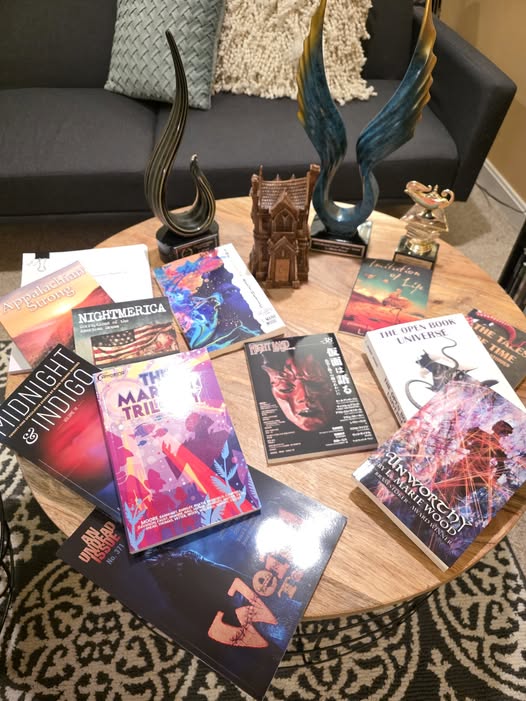
Won the Bram Stoker award for Superior Achievement in Short Nonfiction (Became the 7th African American person to win a Bram Stoker Award since its inception)
Won the International Impact Book Award for nonfiction (The Horror Aesthetic)
Won the Michael Knost Wings Award
Won the Imadjinn Award for Best Poetry Collection (Imitation of Life)
Became the First African American female President of the Horror Writers Association
Was honored by having my work translated into Japanese and read onstage in Tokyo (to live music!)
Had my work appear in over 10 publications this year – two of which were dream markets Weird Tales and Apex Magazine
Published a short story collection (The Lost Stories), the omnibus of the fun ride that is The Open Book Universe, and a novel in stories (Unworthy)
Saw my very first play come to life onstage (hopefully more to come in this arena)
And next year will see even more words of mine out in the world.
My 5-book slipstream series, The Red Thread Saga, IS COMING!
What is slipstream? Think genre-bending – you’re close if you do that, but not quite there. Slipstream is non-conforming. It allows the story to “slip” into different genres, encompassing elements as needed to craft a surreal and uncanny tale. This series will include elements of horror (I mean, of course there will be horror!), science fiction, romance, thriller, suspense, urban fantasy, action, and more.
Yes… it is a heady experience.
Romance/Horror/Fantasy author Lucy Blue (Bound in Darkness Series) said this of the first book in the saga (The Tryst):
“The Tryst might be the weirdest book I ever read, and that’s absolutely a compliment. This heartfelt and intelligent three-way romance engages exactly the conversations we’re all having about technology and humanity in 2025.”
USA Today Bestselling romance author Dahlia Rose said this:
“The Tryst has such a powerful undertone of not only romance, but it blended so well with the horror elements of the story that you were drawn in completely. L. Marie Wood weaves a tale of three people who drawn together to form something so powerful that the love and loss was palpable.”
!!!!!!
Here’s the back cover copy for Book One, The Tryst:
A moment in time… insignificant and fleeting for most, but for Nicole, Mark, and Eric, it is life-altering. Three strangers meet in a town they don’t know in a place they hadn’t expected to end up only to find that they are exactly where they were supposed to be… again.
Love always finds a way.
Through space and time, past and future, through lifetimes and storylines they were destined to find each other, love each other, lose each other – coordinates and weapons, scenarios and demographics be damned. A malfunction, to be sure. But when Ryan tries to tinker with his project, a weapon the likes of which has never been seen in all of the Galactic Collaborative, he finds out just how inexorable their link is… and how insidious.
The first book of a slipstream series that will challenge the way you think about love, life, connection, and purpose, The Tryst will catch you in its whirlwind and never let you go. Each book in The Red Thread Saga will combine of mixture of urban fantasy, mystery, thriller, psychological horror, action, suspense, science fiction elements in differing measures, always with romance as an undercurrent.
Love always finds a way.
But sometimes that way is paved with bones.
And y’all… the cover… (OMG!)
Mocha Memoirs Press is releasing ALL FIVE BOOKS in 2026, one every couple of months starting on February 14, 2026! This is fitting – the romance between the three main characters hits the ground running in Book One, as does the sci-fi, the steamy, the suspense, ooh, and the thrills, a little bit of the horror (though Book Two will ramp up on the horror in the most amazing way)…
The Red Thread Saga… as in the red thread of fate… (dreamy sigh)…
The Tryst will be available in paperback and audiobook as well!
And that’s it -that’s all I’ve got, though I think that might be more than enough for right now! I hope you enjoy the final days of 2025 and mosey into 2026 with renewed purpose.
Serial fiction — whether as a novel broken into parts, a web serial, or episodic short stories — offers a unique canvas for horror. But it also poses a challenge: how do you keep dread fresh across multiple installments? In this post, we’ll explore how to build horror in serial fiction in a way that grips readers and keeps them returning for more.
Why Horror Works in Serial Format
Horror thrives on slow accumulation. A single chilling moment can be powerful — but horror that unfolds over time can embed dread even deeper. Serial fiction, with its episodic structure, lends itself naturally to layering tension, teasing glimpses of horror, and building toward something larger.
Readers invest emotionally over time. The repeated anticipation — “What will happen next?” — becomes part of the tension. Thoughtful pacing across episodes deepens immersion; recurring dread becomes familiar, yet always unpredictable.
But to succeed, serial horror needs structure, foresight, and careful planning. Without that, you risk either burning out the horror too soon, or losing your audience’s interest.
1. Start with an Overarching Horror Concept — and a Flexible Plan
Before you even write the first episode, sketch out the big picture: what is the core horror? What kind of dread are you building toward? Is it a supernatural threat? A psychological unraveling? A creeping existential horror? Knowing your ultimate vision helps.
That doesn’t mean you need every detail mapped out. Many successful serials keep some mystery — but knowing the endgame helps guide pacing, character arcs, and reveals. As noted in horror‑writing guides, a horror story benefits from a “disturbingly gripping concept.”
You may want to outline a rough beat‑sheet or series arc. Some frameworks encourage breaking horror into acts (setup, reveal, escalation, climax). This helps pace horror across multiple episodes rather than dumping everything too early.
2. Use Episodic Hooks and Cliffhangers
Each episode — each chapter or installment — should end on a note that pulls your reader forward. A cliffhanger, a horrifying discovery, a hint of something more sinister lurking beneath the surface — these make serial readers eager for the next part.
But don’t make every installment a full scare. Balance is key. Alternate tension‑heavy chapters with quieter, character‑driven scenes. This contrast heightens fear when horror returns. Horror‑writing guides stress pacing — mix slow dread with shocking moments.
Avoid “scar overload.” Make scares meaningful and earned. As one horror‑writing guide puts it, always ask: does this horror moment matter? Does it move the story forward or deepen the dread?
3. Build Atmosphere as a Through-Line — Not Just Between Scares
In serial horror, atmosphere is glue. If each episode resets to “normalcy” without lingering dread, the horror can feel disjointed or lose impact. Instead, treat setting, tone, and sensory detail as constants.
Have recurring motifs or details — a single unsettling creak, a smell in the air, an old photograph, a recurring dream, a sense of being watched. Let these details accumulate, shift, and deepen over time. Use setting like a living, breathing entity. Horror writing wisdom emphasizes that setting can function as a character itself.
This sets a base level of unease. Even in “normal” scenes, readers sense that something’s off. That constant subtle dread primes them, so when horror hits — it lands harder.
4. Develop Characters Over Time — Let Horror Affect Them
One of the advantages of serial fiction is time. You can show how repeated exposure to terror changes a character — mentally, emotionally, morally. That character arc deepens reader investment and makes horror more personal.
Make characters real, flawed, vulnerable, relatable. Let readers care about them — then tear away their sense of safety. Horror becomes more effective when readers fear for someone they love.
Also consider long-term psychological effects: dread, paranoia, guilt, grief, fear of loss. These don’t need to be explicit — sometimes showing subtle changes (a character’s hesitation, a lack of sleep, a changed view of the world) can speak louder than overt horror. Serial structure gives room for that gradual descent.
5. Reveal — But Reveal Slowly & Strategically
One of the biggest strengths of serial horror is that you can control what your audience learns — and when. Use that to your advantage: drip out information. Tease revelations. Raise questions. Let readers build their own theories, suspicions, fears.
Don’t rush the monster (literal or metaphorical) onto the page. Sometimes not showing the horror is more terrifying than reveling in it. The fear of what might be around the corner, what might happen next — that’s powerful.
When you do reveal, make it meaningful. Tying revelations to character moments, past hints, or setting details — rather than random jolts — makes them feel earned.
6. Maintain Internal Logic & Consistency — Even for the Supernatural
Whether your horror is supernatural, psychological, or a mixture: set rules. If ghosts appear, decide early their behavior, limitations, and consequences. If there’s body horror or cosmic horror — define internal logic. Horror without rules can lose believability, even in fiction.
Consistency helps readers internalize dread. Once you establish the rules, let horror come from threatening those rules. Breaking rules can be unsettling — but if done without groundwork, it can feel cheap.
7. Use Serialized Structure to Explore Themes & Subtext
Because serial fiction gives time and space, it’s ideal for layered storytelling. Horror doesn’t have to just scare — it can comment. Over time, you can weave in psychological horror, existential dread, societal fears, personal trauma, grief, moral decay. Recurring horror can reflect larger themes like isolation, decay, corruption, guilt.
This is where horror becomes more than a scare — it becomes a mirror to the dark parts of humanity. As some horror‑writing guides note, horror works best when it touches on universal human fears — not just monsters.
8. Let Silence, Normalcy, and Everyday Life Build Contrast
One powerful technique in serial horror is contrast. Let parts of the story feel normal, mundane — then gradually warp them. Show the horror mixing into everyday life. A friendly neighborhood, a cozy home, a school — but then subtle change: an odd smell, a stop in the mail, a recurring nightmare.
This makes horror feel closer to reality and more personal. When horror invades the mundane — the everyday — it becomes unsettlingly intimate.
9. Don’t Sacrifice Quality for Frequency — But Be Consistent
With serial fiction, there’s a temptation to push installments out quickly. But horror demands careful mood, pacing, and detail. Rushed episodes — with flattened characters or superficial horror — can break immersion and diminish dread.
Sometimes slower is better. Give yourself time to sculpt atmosphere, character, setting. That care shows. Consistency in tone, pacing, and quality matters more than churning out episodes.
10. Keep the Reader — But Also Respect Their Intelligence
Horror thrives when readers invest imagination. Don’t over‑explain everything. Let them wonder. Use subtle hints. Give them agency to fill in the blanks. In serial horror, maintaining mystery across episodes — without sugarcoating or over-simplifying — respects readers and heightens fear.
Building horror in serial fiction is like weaving a slow, creeping curse. It takes patience, subtlety, planning — and a willingness to let dread build, piece by piece. But if done right, the payoff is enormous: a story that haunts, unsettles, and lingers in the minds of readers long after they close the latest chapter.
Use serialized structure not as a crutch, but as a canvas: build atmosphere, deepen character, layer horror and dread. Let subtle details accumulate. Let tension simmer. And let each installment pull your readers deeper into darkness.
If you commit to thoughtful pacing, emotional truth, consistent internal logic, and slow‑burn horror — you’ll craft serial horror that doesn’t just scare, but haunts.
There’s something exhilarating about horror fiction that introduces a supernatural twist, right? Whether it’s a ghostly whisper, a shapeshifting creature, or an ancient cosmic terror, supernatural elements bring a uniquely spine-tingling flavor to horror. In this post, we’ll explore why these elements are so central to the genre—and how they heighten fear, tension, and even meaning.
What Makes the Supernatural So Powerful in Horror?
At its core, horror thrives on fear—fear of the unknown, the uncontrollable, the irrational. The supernatural naturally taps into that. H. P. Lovecraft said, “The oldest and strongest emotion of mankind is fear, and the oldest and strongest kind of fear is fear of the unknown.”
Supernatural elements singlehandedly amplify this fear: they stretch beyond logic, science, or reason. That’s why gothic writers lean into them—to build suspense and play with our minds. As one source puts it, “Gothic writers use the supernatural to build suspense, and create special effects for the reader.”
These elements become more potent when they blur the line between reality and imagination—something modern Gothic fiction excels at. Some narratives leave us uncertain whether the supernatural is “real,” or a projection of psychological stress. That ambiguity intensifies dread and psychological unease.
Supernatural as the Real Villain
Sometimes, the supernatural is the villain. In many horror novels, the otherworldly force isn’t just in the background—it’s the antagonist. Often, the human protagonist is woefully unequipped to confront it, embedding a sense of helplessness that keeps readers on edge. J.P. Choquette on Medium succinctly puts it: “In horror novels though, the supernatural element IS the antagonist… much more powerful … than our puny little human hero.”
That vast power imbalance is a signature horror tool. A ghost haunting a lonely house, a demon stalking a child, or a cosmic presence leaking madness—they reveal how fragile we are, how limited our control is, and how easily our agency can be stripped away.
These figures instantly tap into cultural fears and expectations. They bring uncanny resonance—like how Beloved uses a ghostly presence to tackle the horror of slavery and trauma, weaving deeper thematic layers into the horror.
Gothic fiction, with its decaying mansions, misty graveyards, and isolated landscapes, also owes its sense of oppressive dread to supernatural motifs. Those settings are more than backdrop—they echo psychological and emotional states.
Roots in Gothic—and How It Evolved
Horror’s roots trace back to 18th-century Gothic fiction. Horace Walpole’s The Castle of Otranto kicked things off, followed by Radcliffe, Shelley, Poe… all weaving in supernatural and psychological chills.
By the Victorian era, short stories thrived on supernatural shocks—ghosts, curses, madness. Authors like M. R. James popularized the ghost story, embedding dread in subtle detail.
Contemporary Gothic keeps reinventing those tropes. Even in modern works like Shirley Jackson’s The Haunting of Hill House, supernatural elements remain ambiguous—maybe the house is haunted, or maybe the characters are cracking—making readers question every detail.
When Supernatural Meets Symbolism
Supernatural horror often symbolically explores internal or societal fears. Toni Morrison’s Beloved offers supernatural horror that stands for unresolved grief, injustice, and historical trauma.
Similarly, ambiguity around supernatural phenomena often reflects mental collapse, sacrifice, or guilt. A supernatural element might stand in for personal trauma, moral corruption, or fragmented identity.
Subgenres Full of Supernatural Spice
Dark Fantasy
A hybrid of horror and fantasy, dark fantasy often uses supernatural features to dramatize moral complexity, psychological truths, or bleak realities. Marianne Gordon describes it as “an unholy blend of horror and fantasy,” often featuring grotesque elements but tackling real-world themes in an immersive but darker-than-normal universe.
For instance, Anne Rice blends sensuality, immortality, and existential dread in novels like Interview with the Vampire, deploying supernatural elements to probe identity, morality, and desire.
Lovecraftian / Cosmic Horror
This subgenre is all about existential dread, the insignificance of humanity, and terrifying forces beyond comprehension. Lovecraft elevated horror into cosmic scale, where the true horror lies in realizing how trivial we are, and how indifferent—or incomprehensible—the universe can be.
Lovecraft’s own essay, Supernatural Horror in Literature, outlines how cosmic dread and forbidden knowledge pervade supernatural horror.
The legacy continues in modern film and media—from Annihilation and The Lighthouse to The Cabin in the Woods—all drawing on cosmic horror’s uneasy, reality-bending vibes.
Folk Horror
Instead of cosmic dread, folk horror plays with rural superstitions, folklore, pagan rituals, and the uncanny magic of the land. Isolation, antiquated belief systems, and eerie landscapes become the invisible supernatural characters.
Films like The Witch and Midsommar, or stories featuring entities like the Pontianak in Southeast Asian folklore, thrive on folk horror’s potent mix of superstition, nature, and cultural memory.
The Reader’s Experience: Why It Resonates
Heightens tension: Supernatural elements bring unpredictability—will ghosts appear? Will something ancient awaken?
Erodes certainty: When reality isn’t reliable, fear settles in. Is the protagonist losing it? Is the world bending?
Amplifies symbolic depth: Ghosts or curses can stand for guilt, grief, history, or human failings.
Expands thematically: From cosmic insignificance to cultural identity, the supernatural stretches horror into many philosophical directions.
Creates atmosphere: Fog, ancient castles, whispered voices—all amplified by the uncanny presence, making story worlds immersive.
Supernatural elements aren’t just fancy trappings—they’re the heart of horror’s capacity to unsettle, challenge, and haunt us. From gothic ruins to cosmic voids, from haunted folk rituals to seductive immortality, they reflect our deepest anxieties and our greatest curiosities.Next time you finish a chilling ghost story or cosmic terror tale, pause and ask: what’s the supernatural really pointing to? Is it grief? Powerlessness? Society’s scars? Or the void behind the veil of reality? That’s the true strength of supernatural horror—it lingers, in mind and soul.


 L. Marie Wood