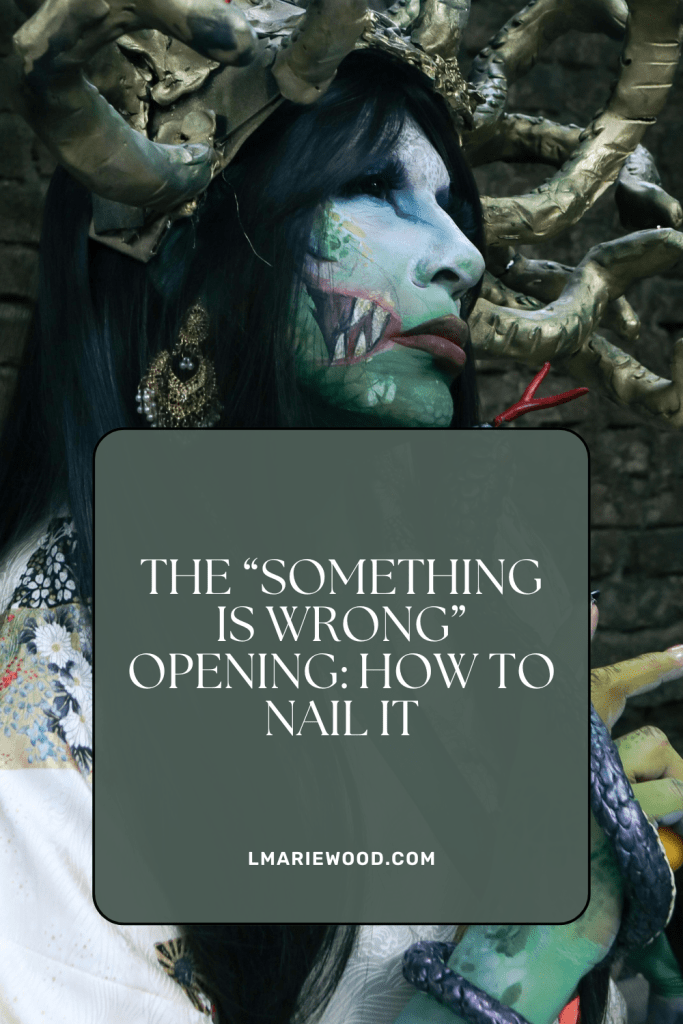
Ever flicked on a horror story and immediately felt uneasy — even before you understood what was wrong? That creeping suspicion, that whisper of “something is off,” is a powerful hook. This article shows how to write an opening that unsettles readers from the very first line — using subtle distortions, sensory clues, and emotional misalignment to prime dread, even before the horror reveals itself.
Why the “Something Is Wrong” Opening Hooks — and When It’s More Terrifying Than a Jump‑Scare
Jump‑scares yell “look over here!” and deliver shock — which can be effective, but often fade quickly. A “something is wrong” opening quietly burrows under the skin. It plants a seed of unease. It sets up internal dissonance. Instead of fear, readers feel suspicion, tension, and instinctual dread.
Psychological horror thrives on uncertainty, ambiguity, and mental discomfort. Early clues that don’t resolve right away — sounds you can’t explain, shadows that move too softly, the wrong smell in familiar rooms — invite readers to fill in the gaps with their own fears. This kind of horror lingers.
Starting with subtle wrongness works because horror isn’t announced — it’s implied. The reader’s mind becomes the instrument of dread.
1. Begin with Normal — Then Skew the Familiar
The best “something is wrong” openings begin in the ordinary: a kitchen at night, a quiet street, a family gathering, a daily commute. That baseline comforts — but also sets up vulnerability when things begin to tilt.
Once everything feels safe, start skewing details: a faucet drip when the sink’s dry, a floorboard that creaks under no weight, a smell you can’t place, lights flickering for a fraction of a second, subtle unease in a conversation. These small distortions accumulate — and because they’re familiar things gone odd, they ring louder in the mind. Horror‑writing guides urge using the mundane as horror’s launching pad.
The key: use small, believable details — not overt supernatural or gore — to undermine comfort.
2. Engage the Senses — Use Smell, Sound, Touch as Atmospheric Clues
Visual horror is obvious. But the most primal unsettlement comes from senses we don’t always notice: sound, smell, temperature, texture. A stale scent in a room, a distant hum, the feel of cold air where there should be warmth — these draw readers in without them realizing.
For example: describe a musty odor that lingers despite a closed window — or a soft rhythmic drip from somewhere unseen. The immediate reaction: confusion, discomfort, wonder. The reader’s brain starts filling in possibilities.
By grounding horror in sensory detail, you shift from “reading a scene” to “experiencing a moment.” The wrongness becomes internal and physical.
3. Show Emotional — and Psychological — Subtext: Let the Reader Sense Dread, Not Just See It
It’s not just the world that can feel wrong — the character can feel it too. Maybe a character feels distant when talking to a friend, or senses a tremor of guilt when entering their childhood home, or has a vague, nameless dread after waking from a dream.
Using internal emotional cues builds discomfort on two levels: the external (what’s happening) and the internal (how the character feels). That dual layer deepens horror. Psychological‑horror writing advice suggests blending setting, inner turmoil, and small distortions to unsettle the reader on multiple levels.
When the protagonist’s mind feels unstable — perhaps because memory is hazy, or they’re overly tired, or grief weighs heavily — the uncanny becomes believable. Reality begins to wobble.
4. Seed Questions, Not Answers — Leave Clues, Not Explanations
One of the strengths of a subtle opening is mystery. Don’t explain the wrongness right away. Don’t yet define the threat. Instead, seed questions: Why does the smell linger? Where did that sound come from? Why do I feel watched?
Ambiguity engages the reader’s imagination — often more effectively than explicit horror. Many horror‑story frameworks emphasize that letting readers imagine the worst can be more terrifying than describing it.
Keep details sparse but suggestive. Let shadows linger on the page. Let silence stretch. Let curiosity — and dread — grow.
5. Use Pacing, Rhythm & Structure to Build Unease — Control Timing to Manipulate Fear
How you structure your opening matters. Too much description too soon — you risk boring or desensitizing. Too abrupt — you risk shock that might feel cheap. Instead, slowly drip in details. Use pacing to build tension.
Open with calm. Then one oddity. Pause. Then another. Let unease accumulate. Use sentence structure to mirror tension: longer descriptive passages for serenity, then shorter, clipped sentences as wrongness creeps in. This contrast between calm and distortion creates psychological dissonance. Horror writing guides recommend this rhythmic build for maximum impact.
Avoid over-explaining or rushing. Let dread arise from silence, implication, and what’s left unsaid.
6. Ground Horror in Character Investment — Make Readers Care Before the Unease Deepens
An opening can unsettle — but to make it stick, readers need to care about who’s experiencing the wrongness. Introduce a character with relatable normalcy: routines, relationships, desires, vulnerabilities. Then, disturb that familiarity.
Once readers emotionally invest, the creeping wrongness cuts deeper. Horror becomes personal. Stakes feel real. Fear becomes empathy. Horror writing experts highlight strong empathetic characters + familiar settings + creeping horror as a blueprint for lasting dread.
When readers care — every floorboard creak, every hint of decay whispers danger, not just ambiance.
7. Blend Internal and External Conflict — Let Mind and World Collide
For maximum effect, combine external wrongness (setting, sensory distortion, odd events) with internal uncertainty (memory, guilt, grief, suspicion). As internal and external bleed together, the line between reality and fear blurs.
This blurring makes horror existential. The protagonist — and reader — don’t know whether what they perceive is real, a memory, or fear. That ambiguity intensifies dread. Psychological horror craft often leans on this merging of internal and external conflict.
Uncertainty becomes the horror. Not what you see — but what you feel, what you doubt, what you imagine.
8. Keep the Payoff Delayed — Build Slow Creep, Not Instant Clarity
Don’t rush the reveal. Let the subtle wrongness simmer across pages — or chapters. Let tension build layer by layer. The longer the delay, the heavier the dread when the horror finally emerges.
Delayed payoff respects the reader’s imagination. It gives space for dread to grow internally. Horror becomes more psychological — rooted in expectation, fear, and the unknown — rather than spectacle. Many horror writing guides argue this slow-burn approach sustains tension longer than straightforward scares.
The “something is wrong” opening doesn’t grab you with screams or blood — it creeps in under calm. It unsettles by making the familiar feel wrong. By blending sensory distortions, emotional unease, subtle hints, and character investment — you can make readers turn the page not just because they want to know what’s happening, but because the wrongness has already begun to seep under their skin.
Start your horror not with a bang — but with a whisper. Let dread build from the cracks.
Sources:
The Art of Fear: Creating Atmosphere and Setting in Horror Writing
How to Write a Horror Story: 5 Tips for Writing Horror Fiction
How to Write a Psychological Horror Story

