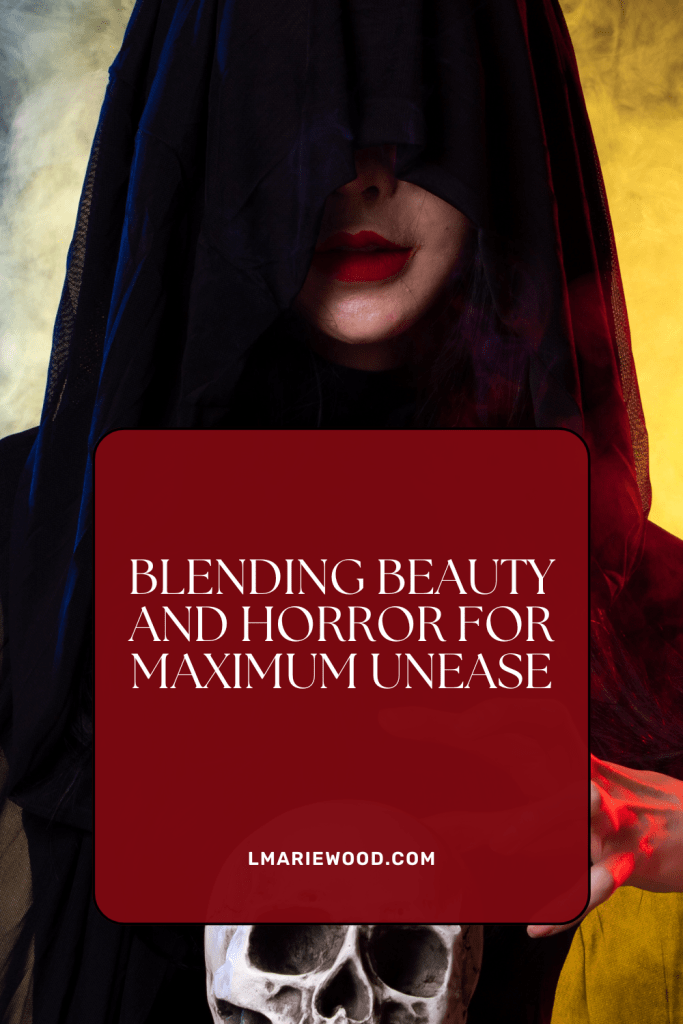
Beauty and horror — they seem opposed. But blending them can create a uniquely unsettling tension. When something familiar, beautiful, or serene hides dread beneath the surface, the contrast makes horror hit harder. In this post, we examine how to merge beauty and horror for a deeper, more disturbing effect.
Why Beauty + Horror Works
Beauty lulls people into comfort — familiar landscapes, soft light, gentle surroundings. When horror overturns that safety, the shock becomes emotional and visceral. Beauty draws readers in. Horror betrays that trust. The duality makes unease linger: readers remember what used to feel safe, and the horror stains what’s beautiful.
This contrast taps deep psychological fear: safe surroundings are no guarantee. Dread isn’t only found in dark alleys — it can emerge in dawn mist, a blooming garden, a sunset beach. Horror hidden in beauty feels uncanny, unpredictable, and personal.
1. Use Contrasting Imagery — Light and Dark, Beauty and Decay
Begin scenes with beauty: golden light, calm sea, flower petals, soft rain, lull of dawn. Then subtly twist details: a flower decays too quickly, water ripples with no wind, a reflection distorts, a breeze smells wrong. That contrast — what feels okay turning wrong — unsettles deeply.
The shocking shift works because readers’ expectations are subverted. Beauty becomes ominous. Safety becomes danger. The horror attacks what is trusted.
2. Make Horror Emotional — Use Beauty to Amplify Loss, Nostalgia, Memory
Beauty often evokes nostalgia or emotional attachment: childhood home, favorite tree, old photograph, summertime sky. Using those as setting — then turning them dark — triggers personal fear, grief, regret. Horror becomes emotional, not just physical.
For example: a childhood park where the protagonist once felt safe — now flooded, deserted, overgrown, echoing with whispers. The horror doesn’t need gore — just betrayal of a beloved place.
3. Use Sensory Juxtaposition — Comfort vs. Dread
Paint sensory details associated with comfort (warmth, gentle wind, soft light, pleasant scents) — then layer in unsettling details (cold drafts, distant moans, twisted shapes, unnatural silence). That layering of senses confuses the brain: what feels safe smells or sounds wrong. The dissonance builds unease.
Beauty disarmed, horror disguised — keeps readers off‑balance.
4. Hide Horror in Mundane or Idyllic Settings — The Unsettling Everywhere
Beautiful places — beaches, forests, gardens, quiet towns — are often seen as safe or desirable. But placing horror in those spaces challenges readers’ assumptions. Danger can be everywhere. Familiar beauty becomes uncanny. Horror becomes unpredictable, closer to reality.
This technique helps horror feel real — because readers recognize the setting. It could be their hometown, favorite park, or childhood backyard. The familiarity makes horror personal and chilling.
5. Use Symbolism & Metaphor — Beauty as Mask, Horror as Truth
Beauty can mask decay, trauma, secrets. Under beautiful veneer — rot, guilt, loss, corruption. Horror becomes the reveal of what lies beneath.
By using symbolic beauty (flowers, light, water, memories), then exposing decay or horror beneath, you engage readers emotionally and psychologically. Horror becomes about truth, memory, betrayal, loss.
6. Control Pacing — Let Beauty Lull, Then Horror Strike
Start slow, peaceful, evocative. Give readers time to trust the beauty. Then, with subtle pacing changes, insert small anomalies — slight scent of rot, a flicker of movement, cold breeze, distant echo. Then escalate. The slow betrayal of safety becomes horrifying.
Effective horror pacing uses rhythm and contrast. As one guide puts it, alternating calm and danger — slow build, sudden shift — keeps tension tight.
7. Develop Characters Who Value Beauty — So Horror Betrays What They Hold Dear
If your characters cherish certain places or memories, the horror that destroys or corrupts those becomes personal. Their emotional attachment heightens horror. Loss, grief, betrayal — these sting harder because the setting once meant safety, comfort, or happiness.
Horror becomes more than immediate danger — it’s loss of identity, memory, innocence.
8. Use Uncertainty, Ambiguity, and Suggestion — Don’t Over‑Explain
When horror hides beneath beauty, ambiguity works well. Don’t always show the monster. Don’t always explain what went wrong. Let decay whisper, let memory flicker, let the reader wonder. Let dread accumulate through suggestion, not explicit gore.
Uncertainty — what’s wrong? Is it a hallucination? Is the beauty a memory or a trap? That tension lingers, making horror more psychological and haunting.
As many horror‑writing guides emphasize: horror thrives on the unknown and what’s suggested more than what’s shown.
9. Balance Horror and Hope — Let Tension Between Light and Darkness Reflect Realism
Too much horror without relief can exhaust readers. Including moments of beauty — even fleeting hope, tenderness, normality — helps reinforce contrast. It reminds readers why the horror matters, and makes its impact deeper.
This balance between horror and beauty — dread and hope — mimics real life, where fear and comfort often coexist. That duality deepens emotional resonance.
10. Let the Horror Leave a Mark — Beauty Betrayed Becomes Haunting
After horror ends — let the beauty stay changed. A scarred landscape, memories tainted, hope lost. That lingering mark — corruption of beauty — becomes horror’s lasting echo.
That haunting aftermath — more than horror itself — can linger in readers’ minds, making the story stay with them long after.
Sources:
The Art of Fear: Creating Atmosphere and Setting in Horror Writing
Horror Writing: Arcs and Pacing Techniques
How to Write a Horror Story: 5 Tips for Writing Horror Fiction
 L. Marie Wood