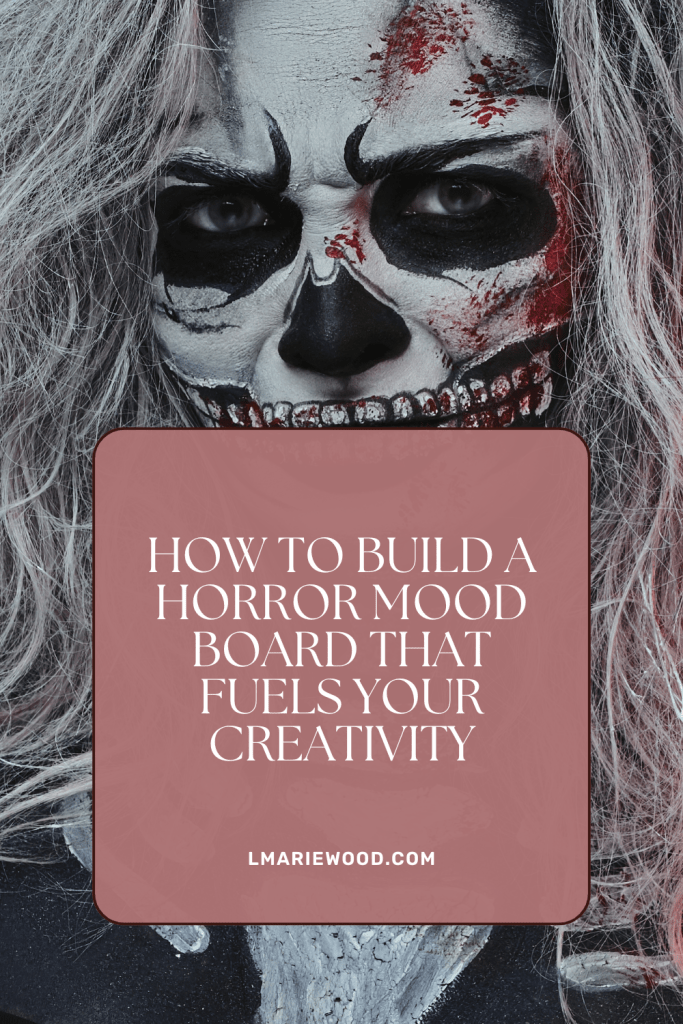
Whether you’re writing a short horror story, novel, or screenplay, a mood board can be a powerful creative tool. It helps visualize tone, setting, color palettes, emotional weight, and thematic echoes. In horror, where atmosphere matters more than action, a horror mood board can fuel inspiration and help you stay consistent in tone, imagery, and dread.
1. What Is a Mood Board and Why It Matters for Horror
A mood board is a visual collage: images, color swatches, textures, reference art, scenery — arranged to reflect a story’s emotional and aesthetic core. It gives direction. It makes abstract feelings concrete. For horror writers, this portable “mood map” helps maintain tone through drafting, revising, or pitching.
Visual references anchor writing. Horror is sensory — dark halls, flickering lights, decaying walls, mist-laden forests. By seeing — not just imagining — these references, you prime your mind for consistent atmosphere.
As one production‑planning guide points out: mood boards help creatives align on visuals, tone, and style even before writing begins.
2. What to Include in a Horror Mood Board
- Setting references — old houses, forests at dusk, abandoned buildings, isolated roads, decaying urban landscapes.
- Color palette — muted greys, deep blacks, sickly greens, desaturated tones, splashes of blood‑red, flickering candle‑light hues.
- Textures & materials — rust, peeling paint, damp wood, cracked tiles, mold, fog, dust, fabric textures.
- Lighting references — dim hallways, flickering neon, moonlit windows, candle-lit rooms, shadows, half‑light.
- Symbolic imagery — old photographs, broken mirrors, empty chairs, footprints in dust, closed doors, cracked glass, silhouettes.
- Emotional/environmental tone — images that evoke isolation, dread, emptiness, decay, unease — rather than outright gore.
Some mood‑board creators recommend also adding sound cues, smell descriptions, and “feels like” notes — to remind yourself the story isn’t just visual, but sensory and atmospheric.
3. How to Build a Horror Mood Board — Step by Step
- Start broad — collect lots of images: architecture, landscapes, textures, lighting, color swatches, even film stills. Don’t overthink. Let instinct guide what feels “off,” “haunting,” or “lonely.”
- Refine the aesthetic — pick a strong central palette. Maybe you’re going for “old‑house decay,” or “foggy forest twilight,” or “urban‑isolation at night.” Let the palette guide your selections.
- Organize by theme or mood clusters — e.g. “entry hallway,” “attic,” “forest,” “distant street at 2 a.m.” For each cluster, pick a few reference images. This helps when you actually describe settings: you can flip the board to that cluster and draw detail.
- Add notes & senses — beside images, write quick notes: “smell: damp wood/mildew,” “sound: wind through broken window,” “light: half‑light from bare bulb,” “feel: cold draft, rough walls.” Encourages sensory‑rich detail in writing.
- Use it as living reference — update as story evolves — As the story changes (new scenes, new moods, new revelations), update the board. Remove images that don’t fit, add new ones. Let the mood board grow with the story.
4. Mood Boards for Writing vs. Film & Production
Mood boards are used in film, theater, game development — not just writing — because they help visualize tone, color, lighting, mood, and pace before expensive production begins. Horror writers can borrow this method.
If you’re adapting horror for screen, having a mood board helps when imagining shots, lighting, sound design, and scene composition — even before a script is written.
That said — even for prose, mood boards serve as anchors. They keep the tone consistent. They prevent tone creep (e.g. slipping into horror‑comedy unintentionally). They preserve atmosphere across drafts.
5. Common Mistakes — And How to Avoid Them
- Over‑saturation on gore or shock imagery. Horror isn’t only gore. A mood board heavy on blood, monsters, and explicit horror risks making your story visually predictable or heavy-handed. Instead, aim for atmosphere first. Use subtle unease, decay, isolation. Let horror build slowly.
- Unfocused aesthetic — too many conflicting moods. If your board mixes “foggy forest,” “abandoned asylum,” “cosmic horror,” “urban dystopia,” the mood becomes muddled. Keep a core aesthetic/theme for each project. If multiple aesthetics are needed (e.g. different settings), use clusters or multiple boards.
- Treating the mood board as decoration, not reference. A board isn’t art — it’s a tool. Don’t expect it to define your story alone. Use it as a guide, not a crutch. Write first, then refine — use the board to anchor, not dictate.
6. When a Horror Mood Board Helps the Most
- Early in the planning phase — helps you find tone and direction.
- When writing setting‑heavy horror (haunted houses, forests, abandoned towns, cosmic horror).
- When writing atmospheric horror or slow‑burn horror — where mood matters more than action.
- When switching between multiple horror scenes/settings — keeps tone consistent.
- When writing collaboratively (anthologies, multi-author projects) — ensures tone coherence across contributions.
7. Mood Board as a Creative Ritual — Fuel for Writer’s Block
Sometimes fear works better when built slowly. A horror mood board can function as ritual. Before writing, spend a few minutes browsing the board. Let mood sink in. Let atmosphere seep into your mind. Let your subconscious fill in creepy details.
It becomes mental priming — a way to get into the horror headspace before typing. It keeps tone consistent and mental dread alive.
A horror mood board isn’t a frivolous extra — it’s a powerful tool for tone, consistency, atmosphere, and imagination. It transforms abstract dread into concrete reference, helps writers stay focused, and fuels creativity when writing horror that hits hard.
Compile your images, colors, textures, scents, lighting, and emotional cues — and let that mood board guide you.
 L. Marie Wood