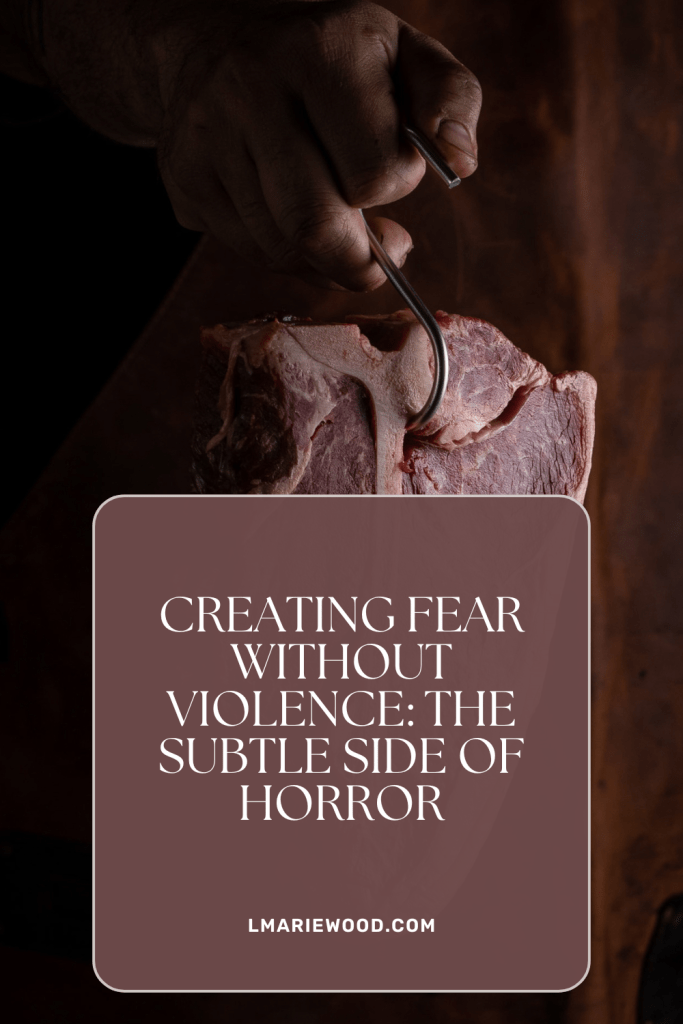
When it comes to horror, the things unseen or barely glimpsed often terrify us more deeply than the goriest scenes. Subtle horror—those films and stories that weave fear through atmosphere, suggestion, and psychological tension—proves that you don’t need overt violence to send a chill down the spine. This kind of horror lingers, playing on our fears of the unknown and the unseen.
The Power of Sound in Horror
Take, for instance, “The Exorcist.” This film isn’t just about the visual horror of possession; it’s the chilling sounds that burrow under our skin. Director William Friedkin used sounds recorded at an abattoir to create an unnerving background for the possession scenes, adding to them a distorted, disturbing vocal performance that transformed a young girl’s voice into something truly monstrous.
It’s this layering of the ordinary with the grotesque that leaves a lasting impression, proving that our ears can be just as easy to terrorize as our eyes.
Visual Tricks That Mislead and Disturb
Horror filmmakers often use visual tricks to create a sense of unease. One notable technique is the intentional continuity error. In “The Shining,” Stanley Kubrick designed the Overlook Hotel with impossible geometry, using unsettlingly inaccurate layouts that subconsciously disturb the viewer, creating an atmosphere where something feels perpetually “off”.
Similarly, the use of Dutch angles and tight framing can make viewers feel disoriented and claustrophobic. These camera techniques skew our perception of reality within the film, enhancing the psychological discomfort.
Manipulating Expectations to Create Suspense
The anticipation of horror can sometimes be more frightening than the horror itself. Filmmakers manipulate viewer expectations through pacing and the strategic placement of hints and teases. This builds tension, making the audience brace for impact at every turn, only to be hit with the scare when they least expect it. It’s this play on anticipation that keeps the audience on edge throughout the experience.
Atmosphere: The Subtle Art of Crafting Unease
In horror, the setting is never just a backdrop; it’s an active participant in the terror. Consider how everyday locations are transformed into nests of fear with just the right lighting or an odd angle. A flickering street lamp or the shadow of a tree against a curtained window can turn a familiar place into a scene of dread. It’s not just about where you are, but how you see it that can turn the ordinary into the terrifying.
The Role of Pacing in Building Anxiety
Slow, creeping camera movements are a staple in horror films, meticulously revealing more of the environment or approaching a character from behind. This technique builds a nail-biting anticipation. It gives the audience a feeling of creeping dread, as if they are being drawn slowly towards something awful, with no power to stop it.
Psychological Depth: Fear from Within
Perhaps the most profound fears are those that originate from within. Psychological horror dives deep into the human psyche, exploring themes of madness, paranoia, and existential dread. These films might show less on the surface, but they invoke a deeper kind of fear—a fear that lingers long after the movie has ended because it touches on the fragilities and dark corners of our own minds.
Using Minimalism to Maximize Fear
Less is often more in horror. A minimalist approach can evoke a deeper sense of fear than explicit scenes of chaos and violence. By holding back on showing too much, filmmakers allow the audience’s imagination to take over, filling in the blanks with their own fears and anxieties. This technique is potent because what we imagine is often far scarier than what we are shown.
In the world of horror, the subtle art of fear without violence relies heavily on the psychology of the viewer. It taps into the primal parts of our brain that still fear the dark unknown, the unseen dangers lurking just out of sight. These are the fears that do not fade with the rolling credits; they follow us, lingering in the shadows of our minds, proving that in the realm of horror, sometimes the most profound terror comes not from what is seen, but from what is suggested.
Subtle horror teaches us that the true depth of fear can often be found not in the overt but in the understated. It shows us that horror can be an elegant, cerebral game—one where the most potent terrors are conjured, not displayed. As we peel back the layers of these masterfully crafted experiences, we find at their core a chilling truth: the things we do not see are often the most terrifying of all.
 L. Marie Wood